10 Car Rivalries That Changed Automotive History
Some cars become better because engineers discover a new idea. Others improve because a rival has just raised the standard and standing still is no longer an option.
The greatest automotive rivalries have influenced far more than advertising campaigns and showroom arguments. They have accelerated engine development, changed the shape of racing cars, improved safety systems, created new vehicle categories and forced manufacturers to deliver more value.
This Abu Rashid Cars guide explores ten confrontations that helped reshape performance cars, luxury sedans, rally machines, family cars and pickup trucks.
Why Automotive Rivalries Matter
Rivalry becomes valuable when it forces manufacturers to solve problems differently. One brand may chase power, while another focuses on lower weight, sharper handling, stronger reliability or a better ownership experience.
Motorsport rivalries often produce improvements in cooling, aerodynamics, brakes and durability. Showroom competition creates a different kind of pressure, encouraging better interiors, more safety equipment, stronger warranties and more efficient powertrains.
There is rarely one permanent winner. Leadership changes as regulations, technology, customer expectations and vehicle generations evolve.
1. Ford vs Ferrari: The Le Mans Programme That Had to Win
Ford did not create the GT40 as a casual experiment. The programme had a clear purpose: challenge Ferrari at the 24 Hours of Le Mans, where the Italian manufacturer had established a dominant run.
Early GT40 attempts exposed reliability, stability and development problems. Ford continued refining the car with engineers, teams and drivers until three GT40 Mk IIs swept the podium in 1966.
That result began four consecutive overall Le Mans victories for different versions of the GT40 between 1966 and 1969, ending Ferrari's six-year winning streak.
2. Porsche 917 vs Ferrari 512: Endurance Racing at Full Force
The Porsche 917 and Ferrari 512 represented one of endurance racing's most extreme periods. Both were built around large engines, high-speed aerodynamics and the challenge of remaining competitive for 24 hours.
The 1970 Le Mans field brought multiple 917s and 512s together in difficult weather. Accidents and mechanical failures showed how quickly raw speed could become irrelevant without durability and control.
Porsche secured its first overall Le Mans victory in 1970 and won again in 1971. Ferrari's 512 remained an enduring symbol of the five-litre sports-car era, even though it could not overturn Porsche's results.
3. Ford Mustang vs Chevrolet Camaro: The Pony-Car Argument
Ford unveiled the Mustang in 1964 and created an immediate commercial phenomenon. More than 418,000 examples were sold during its first year, helping establish a new category of affordable, customisable American performance cars.
Chevrolet responded by introducing the Camaro in September 1966 for the 1967 model year. From that point, the two cars became natural opponents on the road, track and showroom floor.
The contest evolved beyond V8 power. Later generations competed through chassis engineering, braking, aerodynamics, technology and track-focused variants.
4. Ferrari vs Lamborghini: Two Italian Visions of the Supercar
Ferrari's road-car identity grew from a company deeply connected to motorsport. Lamborghini, founded in 1963, approached the market from a different direction, pursuing fast grand tourers and dramatic road cars.
The real rivalry is more interesting than the often-repeated personal stories surrounding Enzo Ferrari and Ferruccio Lamborghini. It is a clash of philosophies.
Ferrari repeatedly translated racing ideas into road cars. Lamborghini placed greater emphasis on visual theatre and bold architecture, with cars such as the Miura and Countach changing expectations of what an exotic car should look like.
5. Mercedes-Benz S-Class vs BMW 7 Series: Defining Luxury
Mercedes-Benz officially introduced the S-Class name with the W116 in 1972. The model became closely associated with comfort, safety engineering and advanced technology.
BMW launched the first 7 Series in 1977. It entered the luxury-sedan market with a stronger emphasis on driver involvement while retaining the space and equipment expected from a flagship.
The contest gradually expanded from engines and leather quality to suspension control, cabin isolation, rear-seat comfort, infotainment, driver assistance, lighting and electrification.
6. BMW M vs Mercedes-AMG: Everyday Cars With Serious Performance
AMG began in 1967 as an engineering company focused on racing engines. Its class victory and second-place overall result at the 1971 Spa 24 Hours with the Mercedes 300 SEL 6.8 established its performance reputation.
BMW Motorsport was founded in 1972 to coordinate BMW's racing activities and develop high-performance machinery. It later became BMW M.
Their long-running contest turned practical sedans, coupes and estates into genuine performance cars. BMW M developed a reputation for balance, steering response and driver engagement, while AMG became associated with powerful engines, strong torque and distinctive character.
7. Mitsubishi Lancer Evolution vs Subaru WRX STI
Mitsubishi introduced the Lancer Evolution in 1992 as a production model shaped by rally regulations. Subaru's first Impreza WRX STI followed in 1994.
Both combined turbocharged engines, all-wheel drive and practical sedan bodies, but their personalities were not identical. Suspension tuning, torque distribution, engine behaviour and steering response gave each car a loyal audience.
World rallying, tuning culture, magazines and video games transformed them into global icons. Their influence remains strong even though production and market availability have changed.
8. Toyota Supra vs Nissan Z vs Mazda RX-7
This was never a simple two-car duel. Supra, Z and RX-7 represented three different approaches to Japanese performance.
The Supra became known for powerful engines and tuning potential. Nissan's Z cars balanced performance with usability and long-distance comfort. Mazda's RX-7 relied on low weight, compact rotary engines and a more delicate driving character.
During the 1990s, the three cars became central to magazine comparisons, tuning workshops and enthusiast debates. Films and video games later expanded their reputation well beyond their original markets.
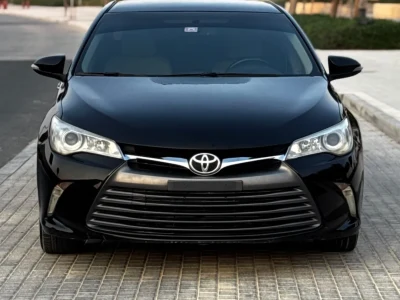
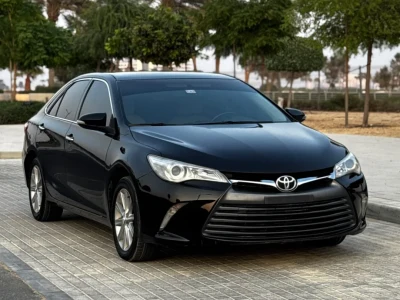
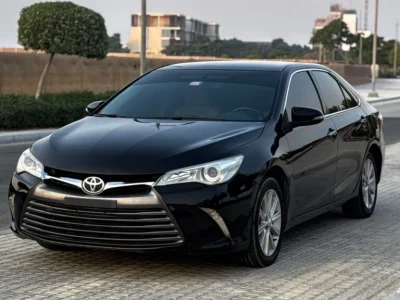
9. Toyota Camry vs Honda Accord: The Everyday Rivalry
Camry and Accord show that the most influential competition does not always happen on a circuit. Their long rivalry helped redefine what buyers should expect from a mainstream family sedan.
Camry became strongly associated with comfort, quietness, dependability and resale value. Accord often offered a more driver-focused character while maintaining practicality and efficiency.
Each new generation pressured the other to improve cabin quality, powertrain efficiency, safety equipment, connectivity and refinement.
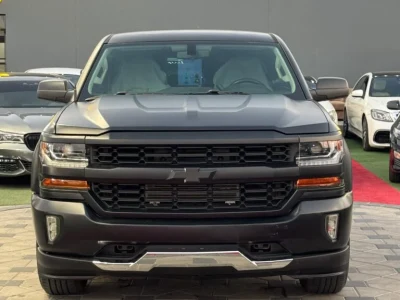
10. Ford F-Series vs Chevrolet Silverado
Pickup trucks began as straightforward working vehicles. Competition helped transform them into machines that can tow, carry, travel off-road and serve as comfortable family transport.
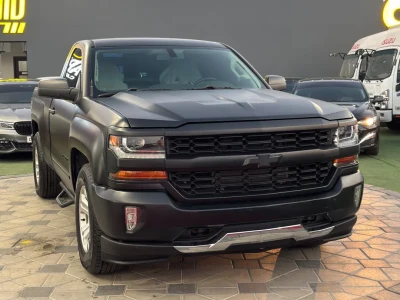
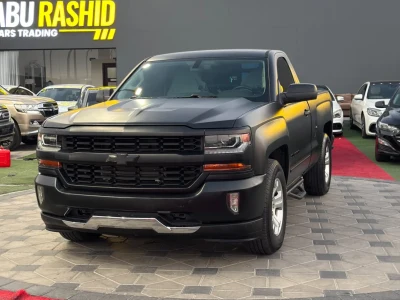
Ford F-Series and Chevrolet Silverado have repeatedly competed through engine choices, towing technology, chassis design, four-wheel-drive systems, trailer cameras, cabin storage and luxury trim levels.
The result is a market ranging from basic commercial trucks to highly equipped premium and off-road models.
What Drivers Gained From These Rivalries
| Area of competition | Engineering effect | Benefit for drivers |
|---|---|---|
| Endurance racing | Cooling, aerodynamics and reliability | Stronger powertrains and proven engineering |
| Sports cars | Power, weight, braking and chassis control | Higher performance and sharper handling |
| Luxury sedans | Safety, comfort and digital technology | Advanced features spreading to lower segments |
| Family cars | Efficiency, reliability and cabin quality | Better value and lower ownership stress |
| Pickups | Towing, payload and off-road systems | More capable and versatile vehicles |
Competition does not always produce a lower sticker price. It may instead deliver more equipment, stronger performance, better safety or a longer warranty at a similar price.
Why These Rivalries Matter in the UAE Car Market
UAE buyers can experience many of these competing philosophies within the same market. American muscle cars, Japanese performance models, German luxury sedans and powerful pickup trucks are all widely represented.
Buyers searching in Ajman, Dubai, Sharjah or Abu Dhabi should remember that a famous badge or rivalry does not determine the condition of an individual vehicle.
Compare mileage, specification, service records, accident history, market origin, maintenance cost and resale demand—especially when buying a used performance or luxury car.
A Rivalry Helps Create a Shortlist, Not a Final Decision
One car may offer stronger acceleration while another provides better comfort, reliability or resale value. The correct choice depends on your budget and intended use.
Browse cars for sale in the UAE and compare available options, or visit the Abu Rashid Cars blog for more buying, inspection and ownership guides.
Compare the Cars Behind the Rivalries
Explore sports cars, luxury sedans, SUVs and pickup trucks through Abu Rashid Cars UAE and compare price, mileage, specification and condition before buying.
Frequently Asked Questions
What is the most famous rivalry in automotive history?Ford versus Ferrari at Le Mans is among the most famous. Ford's GT40 ended Ferrari's winning run and achieved four consecutive overall victories between 1966 and 1969.
Did Ferrari and Lamborghini become rivals after an argument?Several personal stories are widely repeated, but the more reliable historical distinction is their different philosophies: Ferrari developed a racing-led identity, while Lamborghini focused on dramatic high-speed road cars and grand tourers.
What is the difference between BMW M and Mercedes-AMG?Both are performance divisions. BMW M became known for chassis balance and driver involvement, while AMG developed a reputation for powerful engines, torque and distinctive character. Modern models increasingly overlap.
Why are the Lancer Evolution and WRX STI so famous?Their combination of turbocharged power, all-wheel drive, practical bodies and rally heritage made them accessible performance icons.
Does competition make cars cheaper?Sometimes, but it more commonly encourages brands to include better technology, equipment, safety and warranty coverage at competitive prices.
How should I choose between two rival cars?Compare real use, purchase budget, maintenance, reliability, insurance, resale value and the condition of the specific car. Do not choose on reputation or horsepower alone.
Sources
- Ford Motor Company: GT40 and Le Mans History
- Official 24 Hours of Le Mans: Ford GT40
- Official 24 Hours of Le Mans: Porsche vs Ferrari
- Ford Middle East: Ford Mustang History
- Chevrolet Heritage Archive: Camaro History
- Ferrari Official History
- Lamborghini Official History
- Mercedes-Benz: First Official S-Class
- BMW Group Classic: First BMW 7 Series
- Mercedes-Benz Group: Mercedes-AMG History
- BMW M Official History
- Mitsubishi Motors: Lancer Evolution History
- Subaru: STI and WRX STI History
- Toyota: Camry History
- Honda: Accord History